I am sure many of you have heard about the rise of antibiotic resistance. Bacteria are beginning to fight back against our key mechanisms of destroying bacterial infections. Everyone has heard of Tuberculosis and if you haven’t, well unfortunately you may need to be aware of and concerned about this disease. I learned in my Anthropology of Global Medicine class that TB was an old infectious respiratory disease that affected most of the globe. America even had many outbreaks of this disease, but it was controlled with simple antibiotics. By the 1980s, TB outbreaks began once more and concerning many scientists and researchers was the fact that our antibiotics weren’t working against the bacteria anymore. Let’s discuss how antibiotics have gained resistance and why this terrifying problem is occurring.

Antibiotic resistance is mainly caused by one thing…us. No, we are not doing this purposefully or even knowingly. On a national and even global level, humans are constantly being exposed to antibiotics. Foods that we eat, especially meats, are laced with antibiotics. As population levels rise and the demand for meat increases, animals are given antibiotics to help them grow at faster rates to further our supply. I have also learned that antibiotics are given unnecessarily. “[The] CDC estimates about 47 million antibiotic courses are prescribed for infections that don’t need antibiotics, like for colds and the flu, in U.S. doctors’ offices and emergency departments each year” (https://www.cdc.gov/antibiotic-use/community/about/antibiotic-resistance-faqs.html). Antibiotics do not work against viruses. An antibiotic would do nothing other than cause possible gastrointestinal complications and leave you still very ill from whatever virus is ailing you. Furthermore, people are taking their antibiotics incorrectly. When you are given antibiotics, you take the required dosage for however long it was prescribed. I have had bronchitis many times and by the 6-7th day I always feel fine. Does this mean I do not take the remaining 3 pills for my 10 day prescription? No. This is actually one of the KEY reasons superbugs exist today.
Mycobacterium tuberculosis is unfortunately beginning to act like superbugs. We are starting to see many of these superbugs occurring and antibiotics are not working against them the way they should or the way they used to. According to researchers Madikay Senghore et al., “…the fight against TB faces unique challenges due to…the emergence of multidrug-resistant (MDR-TB) strains” (https://www.nature.com/articles/s41598-019-56001-0). An entire topic about TB was discussed in my Anthropology class and we learned that Multi-drug resistant strains of TB are occurring globally in areas that lack prevention and adequate treatment for regular Tuberculosis. People are not taking the medications accurately and are sometimes prescribed dosages incorrectly. If someone with TB takes a prescription for too few days, left over bacteria can spontaneously mutate and become resistant against antibiotics. Furthermore, conjugation (bacterial sex) is allowing antibiotic resistant organisms to transfer antibiotic resistant genes to other bacteria, creating a population of antibiotic resistant organisms.
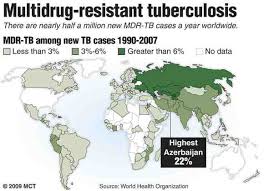
Antibiotic resistance is no joke. Tuberculosis is only one infectious disease that was discussed, but there are many others. Luckily, multi-drug resistant strains of TB can be treated with a second line of defense medications. Unfortunately, as I have learned in classes, scientists are beginning to see extensively-resistant strains of TB that are resistant to first and second line of defense antibiotics. As of right now, there was a case in India of TB that was resistant against ALL of our antibiotics. Unfortunately, we can only look to ourselves to blame for this problem. What is even more worrisome is that scientists are not creating novel antibiotics due to how quickly bacteria gain resistance. There need to be incentives for researchers to create new antibiotics that will hopefully stop this problem of antibiotic resistance. If bacteria continue to gain resistance and antibiotics are not created to destroy them, we could begin to see massive problems in the future for a world that is currently seeing a rise in population growth.

 Charlotte's Blog