
Influenza, commonly known as the flu, is a virus that easily spreads predominantly in the late fall and winter months. Unfortunately, this virus can be lethal, especially for those that are considered immunocompromised such as the elderly, children under the age of one/two and pregnant women. Because of the relatively high mortality rate, vaccines have been developed that help humans fight against the flu. Every year, new vaccines are made in preparation for the flu, but these vaccines vary each year since there are multiple strains of influenza. According to the CDC, “Flu vaccines cause antibodies to develop in the body about two weeks after vaccination” (https://www.cdc.gov/flu/prevent/keyfacts.htm). These antibodies accumulate within the body and are able to fight against the infection once the individual has come into contact with the virus (CDC, 2019). Sometimes the vaccine can be more than 80% effective if it hits just right, but other times it can be no more than 30% effective.
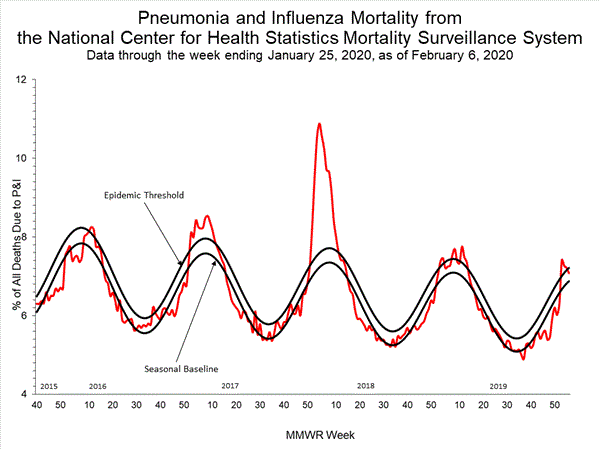
The Flu vaccination is typically a four or a three-in-one shot. The vaccine can protect against both influenza A viruses (H1N1 and H3N2) as well as one of the influenza B viruses. The CDC has stated that for this year (2019-2020) it is hard to determine the effectiveness of the vaccination as of right now since it is still early. However, according to an article in HealthNews, “early reports from the World Health Organization (WHO) suggest this year’s shot might not be the most effective. Two of the strains that just struck the Southern Hemisphere, and then predictably may move north, aren’t included in the new vaccine” (https://www.healthline.com/health-news/the-flu-vaccine-might-be-mismatched-but-you-still-need-your-shot). On the bright side, the CDC’s Pneumonia and Influenza Mortality Surveillance has recorded that 7.1% of deaths in the United States during week four of the New Year (end of January 25, 2020) have been due to Pneumonia and Influenza (https://www.cdc.gov/flu/weekly/index.htm). As can be seen in the graph below, this is down from the epidemic threshold which is around 7.2% at the end of week four.
Even though the flu vaccine may not always hit its mark, it is important to get the vaccination each year. As my Microbiology Professor, Dr. Cramer, mentioned in class once, some form of protection is protection. It is likely that if you received the vaccine, you will survive if contracting the flu. The vaccine exposes you to the virus, even though the 2019-2020 flu virus may have different strains than the vaccine. The flu is not something to take lightly. Unfortunately, influenza has a segmented genome that acts as a virulence factor for the organism. This segmented genome allows for antigenic shift, meaning that different segments of the virus from different organisms can integrate in a host’s genome. Ever heard of Avian flu? Somehow, a segment of a human flu virus combined with a segment of a bird flu virus, integrated inside of a bird’s genome and allowed the virus replicating inside of the bird to transmit to humans. Antigenic shifts of flu viruses are lethal and we see this from the Avian flu. Remember, the flu CAN be lethal. To prevent the spread of this infectious disease, get your flu shot, wash your hands, and stop touching your face!

 Charlotte's Blog